在愚昧之巅信心爆棚 ,于开悟之坡看见局限

▲点击进入 相应板块
" Pink Fence "
PART TWO
△
点击播放音频
KEY WORDS
图片均来源于网络 | 侵删
加小助手VX【luluxjg1】领取全文逐字稿


Dunning‑Kruger Effect

♦ The less you know, the more confident you feel
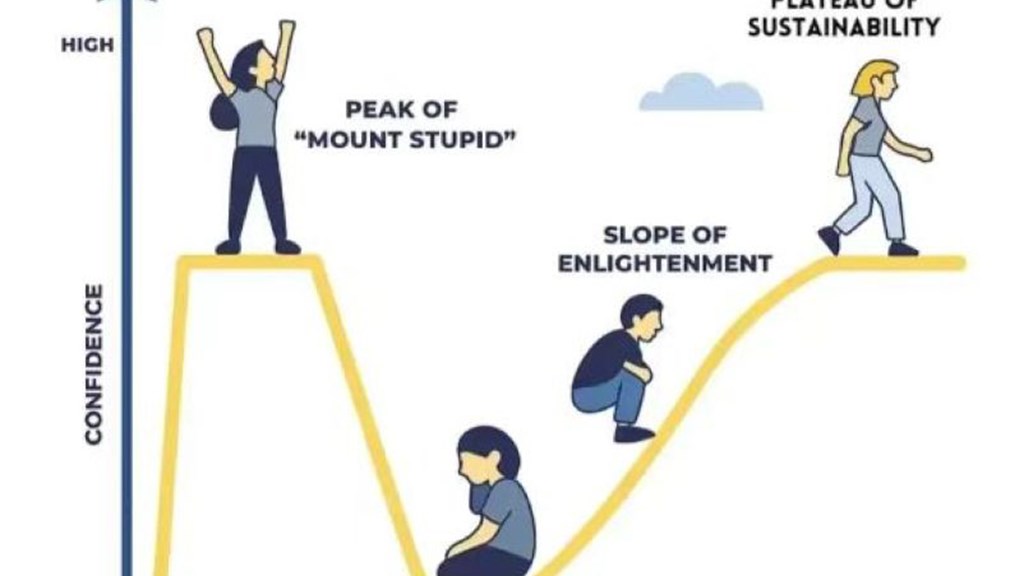
♦The learning curve: peak of foolishness → valley of despair → slope of enlightenment
♦Algorithm keeps us stuck at the “peak of foolishness”

Real-world examples of the pink fence
♦ Same video, different comment sections (Chinese social media case)
♦Generational divide: different content for parents vs kids; different platforms
♦Doom scrolling (negative feedback loop of anxiety)
♦Fun content trap: short addictive clips eat up free time
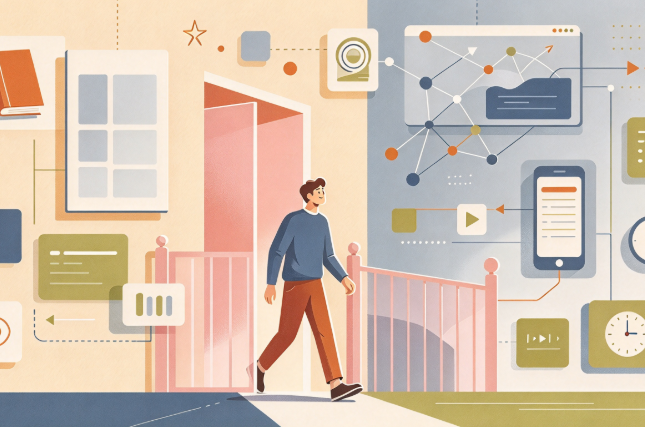
Solutions: How to manage the pink fence
♦Actively curate your feed: seek unfamiliar topics, engage opposing views
♦Use multiple information sources; read full articles, not only headlines
♦Consume long form content instead of only short sensational videos
♦Read books / print media to escape algorithm tracking
♦Goal: manage hyper connectivity, do not fully escape it

节目文稿全记录
#949
Hello again欢迎来到Happy Hour英文小酒馆。关注公众号璐璐的英文小酒馆,加入我们的酒馆社群,邂逅更精彩更广阔的世界
Hi, everyone and welcome back to Happy Hour. 欢迎回来酒馆. Hi, 安澜.
Hi, Lulu, hi, everyone.
And the thing that I really like is there is a psychological concept called The Dunning Kruger Effect.
Oh, I love that.
So it's very simple, the less you know about the world, the more confident that you understand it. You don't realize how narrow your perspective is. You feel smart and informed because you see so much content even if it's all the same.
Yeah, because you are like at the peak of foolishness and stupidity.
Well yeah, but it's also that beginners’ confidence that you have. This is something I've always agreed with. So the more that you learn, the less you actually know.
Or at least that's how you perceive it.
Well exactly yeah, because you start to realize your own limitations.
Exactly. And then you fall into valley of despair, what they call.
Yeah.
And then gradually you go on the slope of enlightenment.
Exactly.
To reach the final, I don't know, epiphany or whatever. But with this algorithm, with the pink fence, with the filter bubble and the echo chamber, we are probably forever stuck at the peak of foolishness or stupidity because everyone agrees with us, we must be right.
Yeah precisely.
So we were talking about a lot of academic concept. Let's put it in practice.
Ok.
Now a perfect example comes from Chinese social media. There was a story about a couple who scrolled through the same news event, but their comment sections, even though they were watching exactly the same video, but they were checking the comment section, and their comment sections looked completely different. She saw comments filled with sympathy for the female perspective while his feed was dominated by comments from a male viewpoint. Same event, two different realities.
Exactly. But there's also generational. So your parents and you might be looking at the same thing or you and your kids might be looking at the same thing, but getting completely different ideas about what is the reality.
Exactly or better yet. I think in the English speaking world, kids and the parents generation are just simply on different platforms. For example I mean in the UK most middle aged or older people think TikTok is for teenagers, right?
Well yeah pretty much.
They’re not on TikTok.
No.
Older people are on like Facebook, maybe.
Yeah, maybe like Facebook and I actually do have a very old Facebook account that I sometimes see and I do notice a lot of the content is probably more geared for kind of older people.
Older people exactly, that's like the profile. But there's also the concept of doom scrolling, which was a buzzword a few years back, starting in Covid time I think. Now you're feeling anxious or sad. So you start scrolling through negative news, but because you're seeking it out, the algorithm starts feeding you more of it, creating a feedback loop of anxiety.
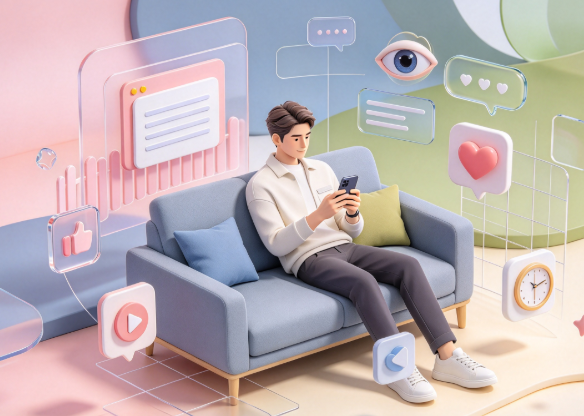
Well yeah and then there's the fun pink fence. You've had a long day, so you want to watch some comedy sketches. The algorithm thinks they wanna be entertained, so it starts showing you shorter, more intense, more addictive clips. You lose track of time and end up wasting your entire evening.
It's not just news. It's the content we choose to relax with, which can become just as much of a trap as content we agree with. The fence is pink because it's made of what we like, what makes us feel good.
So the academic term for this is hyper connectivity. We have more access to information than ever. But we've built these powerful areas where our own ideas are amplified and never challenged.
Yeah, so basically we're connected to the world so to speak or on the surface, but living in a very personal, very comfortable and very limited version of it. Yeah, but hang on a minute. What's so bad about feeling good? I guess the counter argument here is this really as bad as it sounds?
Some researchers argue that the filter bubble isn't as strong as we fear. For example, one study found that people who use personalized news apps actually tend to consume more news, not just more entertainment.
That's a good point. The choice to build defense is still a choice. And research suggests that even when people are exposed to opposing views, they might just become even more entrenched in their own beliefs. So they might just believe their own beliefs are more valid, stronger. So the problem isn't just the algorithm. It's also our own psychology.
So we choose to be in the echo chamber. It makes us feel safe and validated.
Exactly. This technology just allows this to happen, but we are the ones who choose to stay inside. This is a cocoon we have built for ourselves.
So it's not just the algorithm’s fault. Like we kept on blaming algorithm for everything. It's our own cognitive biases, our desire for confirmation. And that makes the pink fence so effective.
Yes. But it's because the algorithm is a mirror to our own desires. It gives us what we want. What we want is to be right, comfortable and entertained. It just takes our natural instincts and super charges them.
So basically the cage is pink because we’ve painted it pink. The algorithm just gave us the paint.
Exactly. So the question isn't just how do we break the pink fence, it's also why do we want to stay in it?
I guess why do we stay in it is very understandable. You just said it's our primal desire to just feel comfortable, right? So what's the solution? How do we break out of this pleasant, comfortable prison?
You can't tear down the entire fence. It's too big. It's been built by billions of dollars and complex code. But you can create a few doors in your own little section of it.
Any suggestions?
Well, a good first step is to train the algorithm to show you a wider variety of things. So search for topics, you normally wouldn’t. So you click over a video with a viewpoint that you disagree with. When you see the same thing over and over again, find the button that says not interested to tell the algorithm to change it. You need to start curating your own feed actively, not just scrolling through.
I guess, take control, be the user, not the (one being) used.
Exactly.
And I guess another way is get your news or your content from multiple sources, not just one platform, not just one type of content creators. If you read an opinion, try to find the same event covered from a different angle.
Read the article, not just the headline. And finally don't just scroll. Read, watch, listen long-form. There is no algorithm that can summarize a complex book or deep documentary in a sixty-second video, force yourself to consume the hard stuff.
I would say even though our conversation here, our podcast is not exactly that hard core, but it's still harder than a 45-second video that is filled with sensationalized content and designed to have a hook in the first 3 seconds and a climax in the first 7 second.
If our listeners our fans are listening to this, I'll say this right now, they’d probably agree.
Exactly. So you are already comfortable with listening to long-form and probably doing more of the harder stuff.
Kudos to you.
Yeah, I feel like we're bragging a little bit.
Yeah. So maybe the solution isn't to escape the hyper connectivity, but it's to manage it. So instead of just asking what's the pink fence keeping me from seeing, ask which fences have I chosen to stay inside and which ones are worth breaking out of.
And I think it is a good opinion to really try to find some views that are challenging your own and find...I hate saying this cliched word but stepping out of your comfort zone, don't set limitations on what you're comfortable with or what you know. For example, if you have never been interested in, let's say, space technology, maybe watch a few things about space technology, so just diversify your feed essentially.
Exactly.
I also would like to say once in a while, maybe we should pick up a book, because that is one way to really step away from algorithm.
Yeah, books don't track you. Well, not yet.
Go back to print media from time to time.
As we're wrapping up this episode, what are your opinions on pink fence? Do you feel like you're trapped in it like a pink fence or information cocoon or echo chamber or do you feel like you're actively building it yourself?
Let us know in the comment section.
And put in your request for any other things that you want us to talk about.
So until next time,
We’ll see you next time.
Bye.
Bye.
排版长图:Jer.ry
文稿校对:Yejing & Jenny
图片来源:均来源于网络 | 侵删

星标 “璐璐的英文小酒馆”
听见更精彩的故事,遇见更广阔的世界






▲点击以上图片,Get世界精选好物


