欧美小费还要算通胀 ?0服务是怎么好意思要小费的 ?

本期新词
Vocabulary
Promptness /ˈprɒmptnəs/ 及时 迅速
Abbreviation 缩写
Fast track 快速通道
Tipflation 小费通胀
Livable wage 维持基本生活的工资
Base pay 基本工资
Bribe/braɪb/贿赂,好处
Giving alms 给与施舍,捐赠
Loose change零钱
To grease the wheel 通过...手段让事情更顺利
*公号文末附本期节目的音频+keywords+英文逐字稿,供大家衍生阅读。来小酒馆,一起用英文视角打开世界~

欢迎加小助手微信【luluxjg1】进入社群哦。来小酒馆,一起看大世界!
3
You Can Read More Here
本期英文逐字稿+音频,欢迎阅读👇
图片均来源于网络 | 侵删
加小助手VX【luluxjg1】领取全文逐字稿

Why do we tip?

Tipping is the act of giving extra money to someone who has provided a service, such as a waiter, taxi driver, or hotel staff.
▼
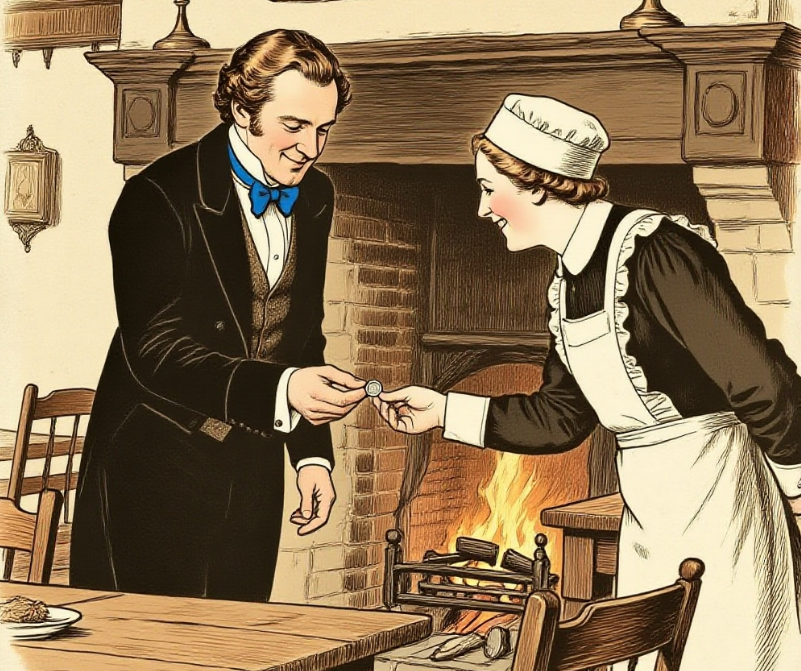
The custom of tipping started in 17th-century England, where wealthy people gave small amounts of money “to insure promptness” (T.I.P).
▼
It later became common in European cafés and hotels, and was brought to the United States in the 1800s.
▼
Tipping became a way to reward good service and show appreciation.
▼
In some countries, like the USA, workers in certain jobs depend on tips because their base salary is very low.
▼
In other countries, like Japan, tipping is not expected and may even be seen as rude.
▼
The amount you tip often depends on the culture and the quality of service.
▼
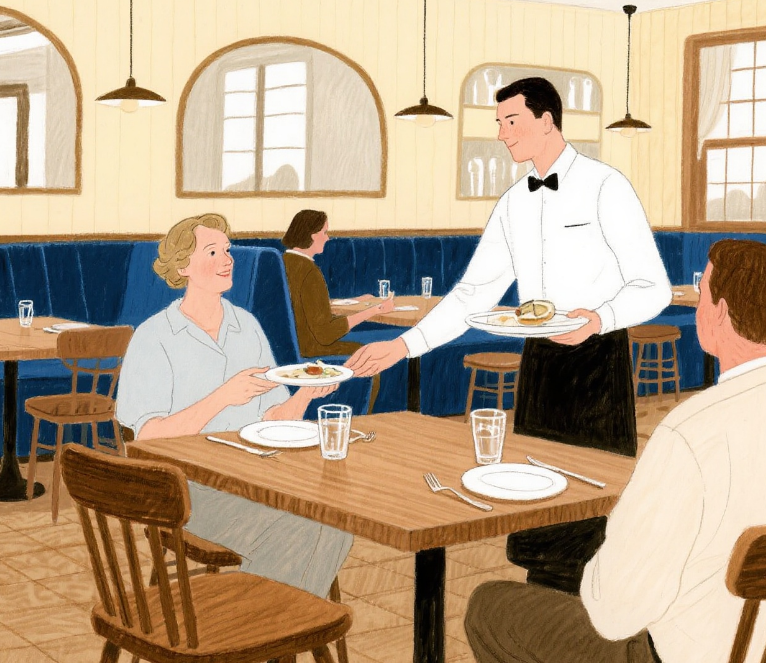
Today, tipping is common in restaurants, bars, taxis, hotels, hair salons, and other service-based industries.
▼
Some places now include a “service charge” in the bill, so an extra tip may not be necessary.
Useful Phrases
Expressions
“Leave a tip” – To give extra money for service.
“Don’t forget to leave a tip for the waiter.”
“Tip generously” – To give a large tip.
“She tipped generously after a great meal.”
“Service charge included” – A note on the bill showing the tip is already added.
“Appreciate the service” – To be thankful for how someone helped you.
“It’s customary to tip…” – A polite way to explain tipping rules.
“In the US, it’s customary to tip 15–20% at restaurants.”
“Gratuity” – A formal word for a tip, often used on bills.
Hi, everyone and welcome back to one of your favorite segments 【Oh, So That's Why!】 《原来如此》.
In this segment 安澜and I will get to the bottom of some of the most common behaviors in English speaking culture or in cultures in general.
Hi, 安澜.
Hi, Lulu, hi everyone.
Can I propose a topic today, Yeah, of course, you know I just got back from Europe. And so there were certain points that I was tipping after a meal or drinking in a bar. I know in Spain, this is not like mandatory or anything. I just want to know that where did the tipping culture come from or this tradition, you still are expected to tip somewhat in the UK.
Oh yeah. To be honest, the idea of tipping or the idea of giving money for a service has been around for hundreds, thousands of years. But the particular action of tipping comes from the 17th century in England.
Now, the reason why we call it tip was that wealthy people gave small amounts of money To Insure Promptness, T-I-P.
Oh, I never knew it's actually an abbreviation, 所以tip是缩写的 To Insure Promptness. Promptness means on time, quick service.
That's right.
It is that because like if you don't give tip then...so for example, if both of us are getting the same service, I tip, you don't, then I get service first.
Pretty much.
Okay, it's like a fast track ticket.
Oh Exactly. So it became really common in European cafes and hotels and it went to the United States in the 1800s or so.
Yeah, but nowadays people have to tip or are expected to tip a lot more in the US and also think many people will complain about the tipping culture because it is much more aggressive there. In the UK if you don't tip, it's still somewhat acceptable.
But in America they are actual waitress... or waitresses or waiters that will ask you, that will give you the look and they’ll ask you what is wrong with my service. Yeah. In the UK I only experienced that in a Chinese restaurant.
Oh Yeah. In the UK you tip around maybe 10 to 15%.
In the US, I think it's 15. And If it's a big party then over 20%.
Yeah. It can be 20% or even 25% to a bill now. So this is something now called tipflation.
Tipflation,就是tip也要通胀的嘛,天下人美国人其实是苦这个tipping已久, but why do you think Americans tip so much or they're expected to tip so much?
Well, the thing is it's mainly because of service staff not being paid enough money.
That's true, because they're getting paid minimum wage or even lower than that. So it's not a livable wage. They simply cannot rely on the base pay to survive. Think about that they only get a very low base salary. Most of their income will come from tips and if you don't leave tip, it is basically like taking their salary away from them and if people take your salary away, will you not get angry?
Well yeah, pretty much. So a lot of people do complain about this when they go to the United States, the idea of constant tipping. But the thing is there are other places in the world where people are encouraged to tip a lot, so for example, in Arabic speaking countries, there's the idea of baksheesh.
Which is ?
Well, backsheesh, b-a-k-s-h-e-e-s-h which is like it's a kind of tip. It can also be almost like a bit of a bribe as a payment to make things easier. Or it could just be ...
To grease the wheel so to speak.
Yeah, it could be a sign of charity.
Okay.
So, it's not really begging but in Islam, giving alms or giving money to people who are poor, it is a key part of the religion.
But then again, there are also cultures in the world where if you tip, you actually offend the server.
Oh yeah.For example, in Japan, there's so many stories about people who leave a tip in Japan and then the waiter comes chasing down the street after them to give them the money back.
I think also in some cultures or in some establishments, they're simply not allowed to accept extra money. Yeah. But of course there are other situations where like if you tip too much, they can't accept it. If you tip too little, it's more of an insult to be honest. Oh yeah. If you let's say you spend a hundred on a meal and you tip like 50 cents, it's an insult.
Well yeah. I remember when I used to be a tour guide and sometimes I would get...
A penny.
I would get like a twopence tip.
What?
Because I don't think it was an insult. I think it was simply because they got confused between£2, a two pound coin and a twopence coin.
So when you were like what,17, 18? you must have felt like a beggar.
I was a little bit surprised. I just said, you know thank you. I just carried on.
I would find that a bit insulting, well yeah.
But nowadays in many countries, especially European countries, you might not be expected to leave a tip because they already preinclude the tip in the bill.
Yeah.
Look at your bill. If it says service charge, then the tip is already included, usually they charge you 10%. Or if it's a nice place, a fancy restaurant, then it's 15%.
So in that situation you don't have to tip, right?
No, no, you don't have to tip because the service charge is included. And to be honest, the service charge is also optional. But it works on the psychology that people are not gonna actively say, can you remove the service charge?
Okay, that is optional? I thought it was just a mandatory thing.
In many places it's optional.
Okay, I did not know that.
By the way, who do you tip? It's just people in service like a waiter or like hotel staff, taxi driver?
Taxi drivers, waiters. We wouldn't really tip people in a pub or in a cafe.
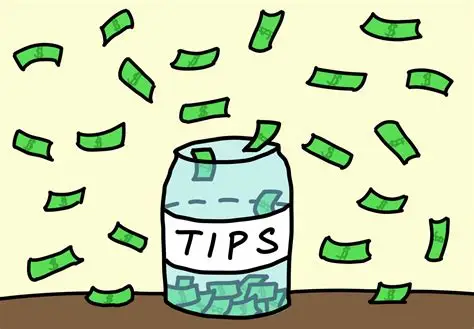
In a cafe, what normally happens is when you pick up your coffee, they normally have a small jar, so you can put in loose change.
But I will never put any money in that tip jar. Because they didn't really offer me a service. I was ordering stuff at the counter. 如果你是到柜台去点餐, they don't have what they call table service. Then you don't really have to tip. no,no.
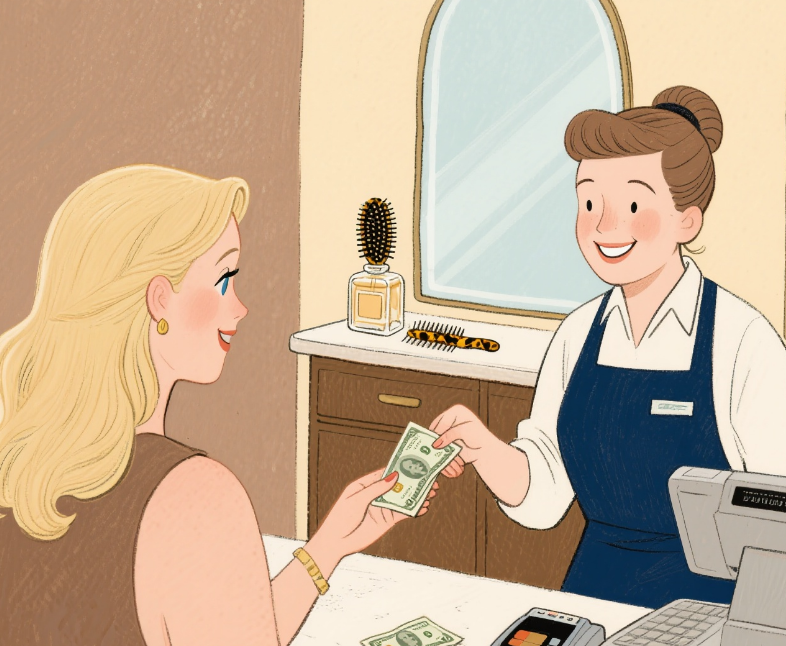
But I think you in the UK you also have to tip like your hairdresser, your nail people that kind of thing because I think the premises is also that you have the money to pay for those extra services then you have the money to tip.
Oh exactly, or we just round up. So for example, we might just say keep the change.
Do you know I think it's really funny. Keep the change is what customers say to service people. But in China sometimes I had that said by service people to me.
Okay, I'm keeping your change.
No, no, they say keep the change and I'm like yeah of course I'll keep the change, it's my money.
Okay.
I think they just learned it the wrong way. I mean I'm not laughing at them. I just find it a little bit funny because it really caught me off guard the first time I encountered it a few times.
So keep in mind, keep the change is when consumers, customers, when they want to leave the tip or just don't get the change back if you pay in cash, you say it to the waiter or the waitress.
If you're working in service, you don't say to customers keep the change because they will keep the change.
Oh Yeah.
Okay. So I think we're gonna wrap up with a few expressions. First of all, to leave a tip.
Yeah, so we don't really say give a tip. We would say leave a tip. For example, don't forget to leave a tip for the waiter or you might call someone a big tipper.
A big tipper, someone who tips generously.
Yeah.
But being a big tipper is not always a good thing. No, no. Because it's when you're too flashy with money. Either people think you have the heart for the waiter or the waitress or bad people might be on to you.
Yeah, now there are more sort of euphemistic ways of saying tip. So we looked at one service charge.
Service charge.
So on the bill or on the check, it will say service charge included or service charge not included.
There is a fancier word, hang on. It's starting with “g”, it’s a gratuity?
Gratuity, yeah.
Is it from the word gratitude?
Yeah, so it's a way of showing gratitude, gratuity.
Gratuity is a more formal word for a tip. Usually you will see this on the bill. And when you are trying to talk about traditions in different countries, you can say it's customary to tip or not to tip.
Yes.
On that note, we are going to wrap up, leave us a comment in the comment section. Let us know your story with tips. What was the largest tip you left?
So until then.
We'll see you next time.
Bye .
Bye.
排版长图:
文稿校对:
中文拓展:
图片来源:
Jer.ry
王全勤 & Jenny
Jenny
均来源于网络 | 侵删
星标 “璐璐的英文小酒馆”
听见更精彩的故事,遇见更广阔的世界




▲点击以上图片,Get世界精选好物


