反派走红 !瑞幸联名毒皇后 :为什么长大后 ,我们更爱反派 ?
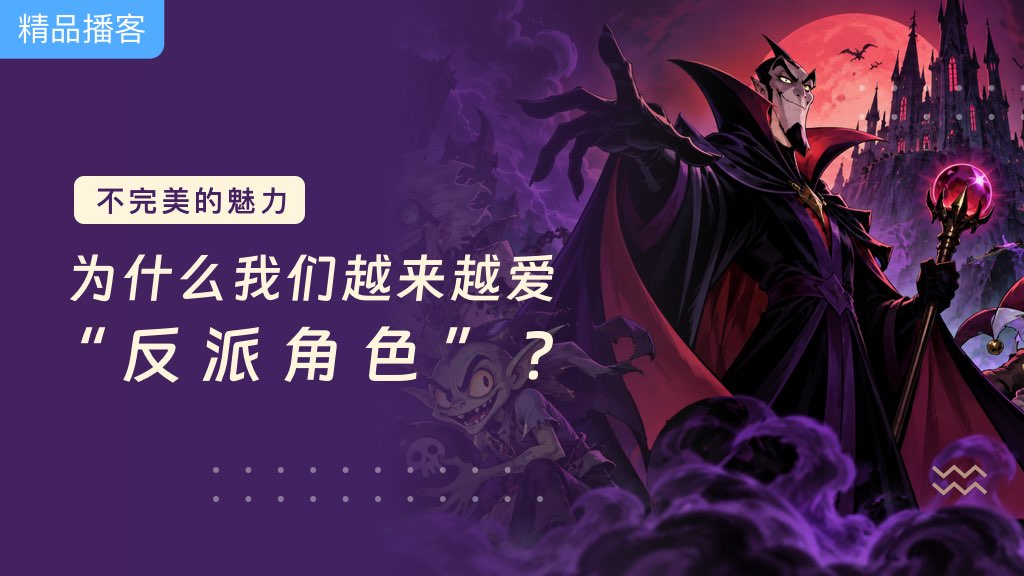

" 我们为什么会喜欢反派 "
PART ONE
KEY WORDS
图片均来源于网络 | 侵删
加小助手VX【luluxjg1】领取全文逐字稿


Phenomenon:
Villains are growing more popular than traditional heroes

♦Example: Evil Queen’s longer meet‑and‑greet lines at Disneyland; more memes and merchandise for villains
♦This is not a one‑off cultural trend, not limited to China

Historical shift in villain writing
♦Early classic villains: pure evil (Richard III, original Evil Queen in Snow‑White)
♦Modern villains: nuanced, round characters with backstories, trauma, insecurities and unmet needs ‑ From simple obstacles for heroes to the main draw of stories

Core psychological explanations
♦Audiences tend to connect with villains who share similar personal traits
♦Cognitive safety net / safe haven: fiction creates a safe distance. People can explore their own shadow‑self and dark impulses with no real‑world harm
♦Carl Jung’s shadow‑self concept: villains give safe access to suppressed parts of personality
♦ Personality traits can influence how people engage with villain characters

Aesthetic & cultural factors
♦Villains often have bolder, more striking visual styling
♦Traditional hero/princess archetypes can feel beige, juvenile and uninteresting
♦Cultural shift: audiences prefer complex, human‑like figures over perfect, flat heroic templates

节目文稿全记录
#942

Hello again欢迎来到Happy Hour英文小酒馆。关注公众号璐璐的英文小酒馆,加入我们的酒馆社群,邂逅更精彩更广阔的世界
Hi, everyone and welcome back to Happy Hour. 欢迎回来酒馆. Hi, 安澜.
Hi, Lulu, hi, everyone.
So what are we going to talk about today?
Well, have you seen what's been happening at Luckin Coffee recently?
I don't know. What’re you talking about?
I went to get a coffee earlier today and I got a coffee with Disney's Evil Queen on it.
Oh, you mean the one from Snow White?
That's the one.
Ahh.
And I'm just thinking what does she really have to do with my coffee?
I saw it! What's funny the Evil Queen is probably more popular right now than the actual princess. You know actually it's not just happening with Luckin or just happening in China, if you go to Disneyland the Evil Queen's meet-and-greet line is sometimes longer than Snow White’s.
Yeah, OK, that I can somewhat believe because it isn't really a one-off, is it?
No, it's part of a much bigger cultural shift.
Yeah.
We're seeing this everywhere and the villains, the baddies , they got more memes, they got more merchandise, more everything.
Yeah. So the question today is why do we love villains?
Because they are “badass”.
Oh, yeah. Now we should be clear, loving a villain as a character isn't the same as supporting what they do. I'm not saying you should poison your stepdaughter or that you should kind of basically make sure that she's like hidden away by little people.
OK. We digress.
Yeah. But there was something about these characters that keeps us coming back. Let's be honest.
Yeah. So we'll look at the psychology behind it, the cultural shift from simple heroes to complex villains and why brands are finally starting to realize that evil selves.
Let's get into it.
So let's start with the phenomenon. When did villains stop being just obstacles for the hero and start becoming the main draw?
Well. Some people will look at Darth Vader(黑武士) in the original Star Wars. So here is this character who's supposed to be pure evil, the mask, the choking of people using the force, and people were obsessed by him. But having said that, this goes back even further.
Okay.
So Richard III by Shakespeare.
OK.
Which we talked about in our 四合一(酒馆名著专辑,可以找小助手要试听哦~).
Yeah, we talked about in our 【名著扫盲班】, but I thought Richard III wasn't actually that evil, it’s just Shakespeare made him into the ultimate villain.
Well in the play he was evil and this was actually probably one of the first times the villain was made as the anti-hero. Because from the very beginning of the play, Richard is telling you exactly “how evil I am. This is what I'm going to do. Isn't it evil?” and the audience loves it.
Yeah.
Because they feel like they're being part of some evil plan. They're not looking at it from an outsider. They feel like they're an insider.
Yeah. But that was the classical villain, wasn't it?
Yeah.
That was pure evil. It's like not an ounce of good.
No.
Yeah, but modern day 反派 or baddies or villains. They are more nuanced. They got more layers to it.
Well, exactly. So look at Darth Vader, by the time that Star Wars got to... I don't know how many movies Star Wars brought out now, I've lost count.
Yeah.
But by this time, we now have his back story.
Yeah.
He wasn't just the bad guy. He was a tragic figure who have been broken, manipulated, lost everything.
Yeah, it's like whether it's we created or we create this stuff or that was originally there but gets studied a little bit more.
So now these modern day villains they are not just what we call a flat character.
Yeah.
They are more of a round character and they are flesh and blood, they've got layers, they've got back story, they've got their own insecurities, their own need for validation.
And it's still the same character, but now there is a reason why they are like that.
Oh, yeah. Look at the Evil Queen in the original Snow White. She was jealous. She wanted to be the fairest, she sent someone to kill a teenager. That's pretty much it. But in the recent films, she's got layers. You see her back story, you see those insecurities and her need for validation. So she becomes tragic almost.
In a way, villains feel like human with all of our flaws while some heroes feel like polished fairy tale templates.
Oh, yeah, exactly. At the heart of it, villains are complicated. They have desires, regrets, motivations that feel real to us. Heroes are just good.
Yeah.
And that's a lot less interesting.
Yeah. So they're so perfect. They are just boring.
Pretty much, that is it.
What's going on here psychologically? Why are we so attracted to characters who are, by definition, the ones we're supposed to dislike?
Oh, yeah. And there's been a lot of research in this, and psychologists have found that people who are drawn to fictional villains choose the ones that resemble themselves.
Aaaaah.
People who share similar traits.
That's why, that explains why I like badass, girl boss type villains.
Pretty much.
So we like villains who are like us.
Yeah.
But there is a catch. In real life. If you met someone with dark, unstable traits that reminded you of yourself, you probably want to keep away from them. But in fiction, it's completely different.
Why?
Well. This is what's known as a Cognitive Safety Net or Safe Haven. Fiction creates a barrier between us and the character. We can identify with their dark impulses without feeling like it reflects on us.
So another way of this is perhaps fiction provides us a way of engaging with the darker parts of our personality but without making you question whether or not you are actually a good person.
So it's like safe distance.
That it is.
It's a safe exploration. You get to experience the thrill of breaking rules, be rebellious, being ambitious or even selfish. But in a controlled environment where no one gets hurt.
Yes.
Apart from the fictional characters.
Yeah.
And there's been research that shows that people with higher levels of things, traits like narcissism were more likely to enjoy and identify with villainous characters. But that doesn't mean that only those people enjoy villains. Everyone does.
For a moment there, I thought you were calling me a narcissist.
You are a narcissist. But it just suggests that personality influences how we engage with these characters.
Actually wasn't it Carl Jung, 荣格, said... had a concept called the shadow self.
Yeah.
So it's part of our personality. We push down, we suppress because it doesn't really fit with how we want to be seen, our public image.
But villains, TV villains and film villains, cartoon villains, let us explore that shadow safely.
Yeah, exactly.
But let's be honest. It's also about social media aesthetics like social media trends, villains just look badass. They look just look cooler.
Oh, yeah, exactly. You have the black capes, the bold colors, the dramatic silhouettes. It's so much more interesting than the princess stuff. It feels a little bit...
Beige,
Beige and juvenile.
Yeah, most of the princess is they just filled beige.
Yeah.
Probably apart from Elsa from Frozen but then again she was originally a villain.
Oh, yeah.
It's just the cartoon version painted her in a more, I don't know, adorable lights.
Oh, yeah, exactly. And our own ideas of society reflect all of this as well. We're looking for something that's unique. We're looking for something that's interesting.
排版长图:Jer.ry
文稿校对:Wanda & Jenny
图片来源:均来源于网络 | 侵删


